
Fine Motor Skills Games: 8 Hands-On Activities to Try
Fine motor skills are the small, controlled movements of the hands and fingers used for tasks such as fastening buttons, holding cutlery and picking up objects. Games can provide opportunities to practise these movements without making every session feel like a worksheet.
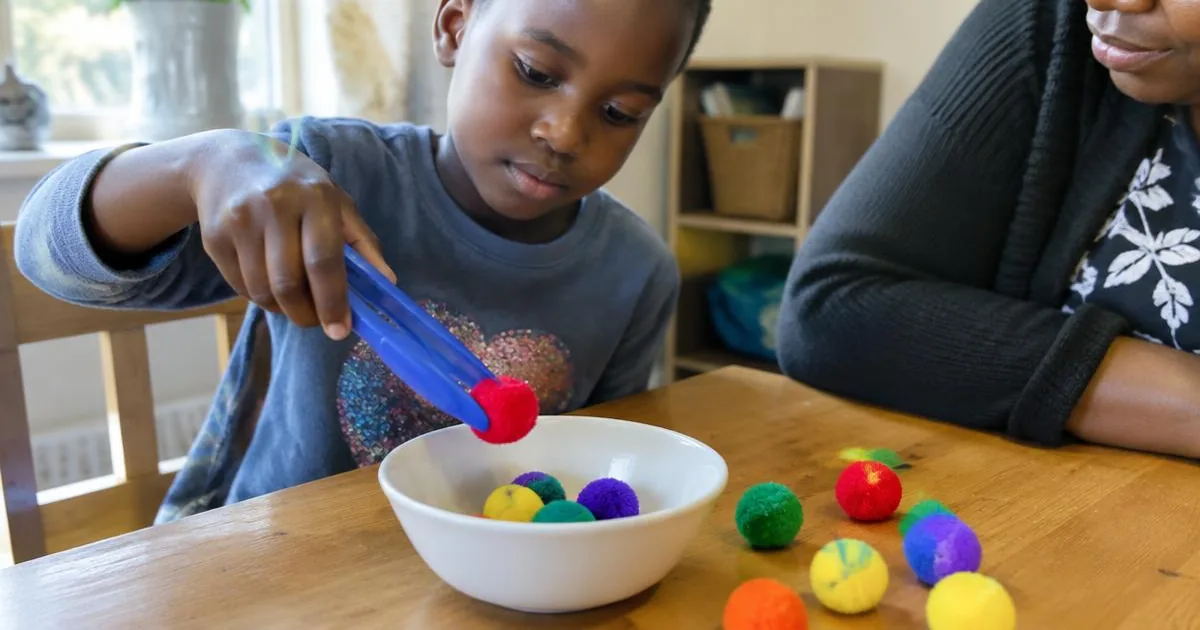
Below are eight activity ideas with simple ways to adapt them. They are everyday play suggestions, not a diagnosis, rehabilitation programme or promise of improved school performance. The featured picture is an AI-generated illustration of supervised play.
Fine motor skills and hand-eye coordination are related, not identical
Fine motor activity concerns controlled small movements. Hand-eye coordination involves guiding action using what you see. Threading a bead calls on both, while a toss-and-catch game involves a different mix of timing, reach and grip.
The Humber NHS activity guide explains fine motor skills and recommends adapting tasks to a child's developmental stage and interests. Our Jacks guide describes a traditional timing game, but its metal pieces and small ball are not suitable for every child.
Before you choose an activity
Use age-appropriate materials and active supervision. Small beads, stones, buttons and pom-poms can be choking hazards; use larger alternatives and follow product guidance. Keep loose objects away from children who mouth items. Check for sharp edges, loose parts and material sensitivities.
Provide a comfortable seated position and a stable table. Start with a movement the player can manage, demonstrate slowly, then let them try. Do not force a particular hand, grip, speed or repeated movement through discomfort.
Eight fine motor skills games
1. Playdough pinch and shape
Offer suitable playdough and ask the player to make a ball, a snake and a row of pinched spikes. Turn it into a pretend bakery or animal-making game. Large shapes and two-handed squeezing are an easier starting point; smaller details add difficulty. Buckinghamshire Healthcare's fine motor play guide includes kneading, squeezing and pinching activities.
2. Large-bead threading
Thread large age-appropriate beads onto a stiff lace or pipe cleaner under supervision. One hand steadies the thread while the other moves the bead. Begin with a few large openings rather than a long necklace. Later, copy a two-colour pattern or use a more flexible lace. Cover or fold over any sharp pipe-cleaner ends.
3. Peg the washing line
Clip clothes pegs onto the edge of sturdy card or hang small fabric pieces on a low pretend washing line. Make it a colour-matching game if desired, with shape or position cues for players who cannot distinguish colours. Choose pegs that open comfortably; resistance is not a competition.
4. Tongs and sorting bowls
Move large suitable objects between bowls with blunt child-safe tongs. Sort by colour, shape or texture, or pretend to serve a meal. Use easy-opening tongs and a wide target bowl first. A player can use both hands or pick up objects directly before attempting the tool. Do not use tiny food pieces as craft materials around children who may choke.
5. Paper scrunch and flick
Scrunch paper into loose balls, then gently flick them towards a wide target on the table. Make a cooperative game of moving all the paper balls into a taped area. Larger targets and pushing rather than flicking are easier alternatives. Stop if repeated finger movements feel uncomfortable.
6. Post the shapes
Use a purpose-made posting toy, or a sturdy container an adult has safely prepared, with large pieces that fit through its opening. Match each shape before posting it. An adult should cut and finish homemade openings; do not leave rough plastic edges. Start with a broad opening and pieces large enough for the intended player.
7. Build and copy
Use age-appropriate interlocking blocks. One player makes a small model; the other copies it, then swaps roles. Begin with a short tower and move to a bridge or repeated pattern. Demonstrate pulling pieces apart as well as joining them. Blocks with a gentler connection may be more comfortable than tight-fitting sets.
8. Dress a toy
Choose a toy or busy board with accessible buttons, zips or fabric fasteners. Dress it for a pretend outing and undo the fastenings afterwards. Large fastenings are a simpler start. A partner can hold the fabric steady without taking over the whole task. The North Cheshire and Mersey NHS guide includes dressing toys and other everyday play ideas.
How to adjust the challenge
Change one thing at a time: object size, opening size, tool resistance, pattern length or the amount of help. If a player cannot complete the task, reduce the difficulty rather than adding a timer. Completing a shared model or pretend meal can be a better goal than racing another person.
Ask what felt easy and what was frustrating. Keep sessions guided by comfort and interest rather than an invented therapeutic timetable. For counting alongside hands-on play, our screen-free maths games use visible quantities and simple turns.
Where Nhodo and phone games fit
Traditional stone games involve picking up and catching real objects. NHODO translates a related timing challenge into taps and swipes. A touchscreen does not reproduce the grip, resistance or object handling of playdough, threading or a real pebble game.
Explore traditional African games for cultural context or NHODO for recreational digital play. Do not present either as occupational therapy or a substitute for an individual assessment.
When to ask for professional advice
If pain, weakness, loss of an existing skill or persistent difficulty affects everyday tasks, ask an appropriate healthcare professional for advice. A list of games cannot identify the cause. Stop an activity that causes pain or distress, and follow any guidance already given by the player's care team.
Frequently asked questions
Controlled finger and hand movements used in fastening buttons, manipulating cutlery and picking up objects are everyday examples.
Large playdough shapes or easy-opening pegs can be a starting point, depending on the player's interests and comfort.
No. Small loose pieces can be choking hazards. Use age-appropriate alternatives and active supervision.
A timer is not necessary. Focus on comfortable, controlled participation and reduce difficulty when needed.
No. Tapping and swiping do not reproduce the physical handling, grip or resistance of hands-on activities.
No. These are general play ideas, not an individual assessment or prescribed treatment plan.
Keep the play, change the materials
Choose a familiar theme, prepare safe equipment and adapt one step at a time. A game that allows a comfortable success is a better starting point than the most complicated activity on the list.
Sources and Further Reading
Game rules, names and terminology vary between communities and regions.